
Bakongo (Kongo) · République démocratique du Congo
Bakongo (Kongo) · Mid-19th to early 20th century.
| Dimensions | Hauteur 83 cm (32⅝ in)Largeur 26 cm (10¼ in)Profondeur 24 cm (9½ in) |
|---|---|
| Pays | République démocratique du Congo |
| Tribu / Culture | Bakongo (Kongo) |
| Époque / Période | Mid-19th to early 20th century. |
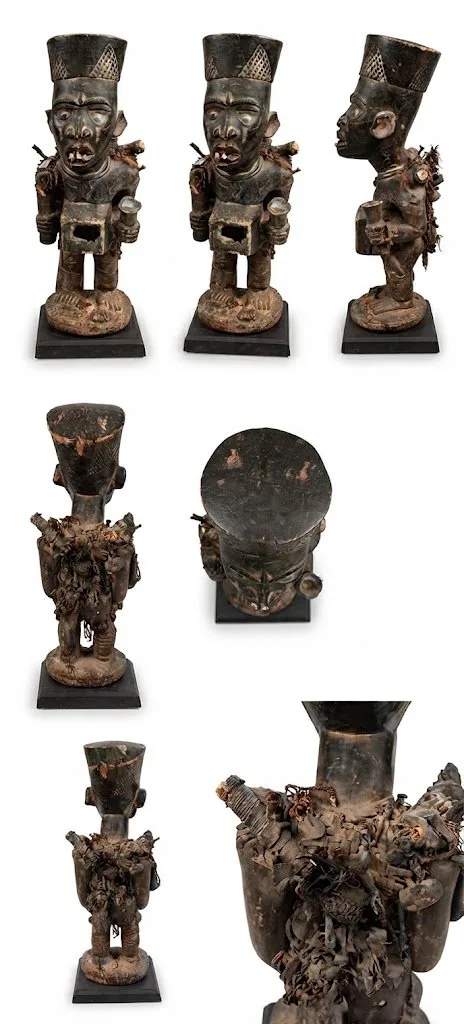
The tall, cylindrical cap with a cross-hatched pattern is the mpu, a sign of chiefly and priestly authority. The inlaid eyes and the open mouth with filed, pointed teeth show an alert, awakened spirit.
The rectangular cavity in the chest held the bilongo; it is now open, its original seal of resin, mirror or clay lost, and it remains a clear sign of the figure’s ritual use. The paired horns at the shoulders served as further receptacles and evoke the strength of animals.
The dark, glossy surface of the head and cap gives the figure a strong graphic presence, heightened by the pale eyes and white teeth. The cross-hatched panels of the cap add a decorative counterpoint to the smooth, rounded volumes of the head, and the horn and fibre attachments contrast with the carved wood. The figure stands firmly on a rounded base.
Note. The figure combines features of two related but distinct Congolese traditions: the mpu cap and chest cavity of the Kongo, possibly Vili or Yombe, and paired horns more usual in Songye power figures.
Bakongo (Kongo) · République démocratique du Congo

Bakongo (Kongo) · République démocratique du Congo

Bakongo (Kongo) · République démocratique du Congo

Yombe · République démocratique du Congo

Yombe · République démocratique du Congo

Yombe · République démocratique du Congo