
Punu · Gabon
· Mid-20th century
| Country | Gabon |
|---|---|
| Age / Period | Mid-20th century Mid-20th century, based on surface wear, worn pigment, and hand-smoothed patina consistent with genuine handling and ceremonial use |
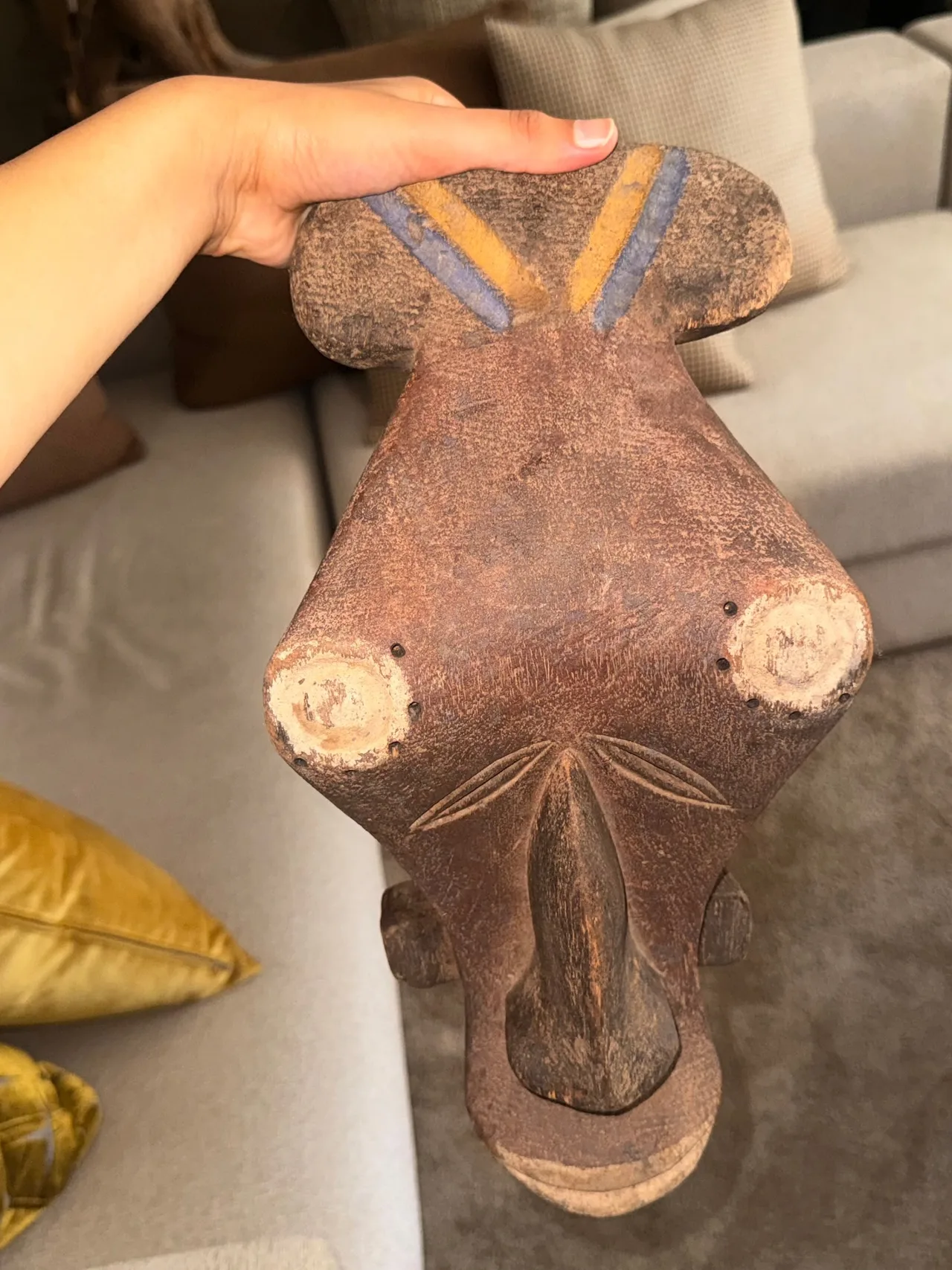
Part of the Goli masking tradition — a multi-mask dance cycle performed at Baule funerals, celebrations, and welcoming ceremonies. This mask's animalistic, muzzle-like face and large disc eyes are typical of the lower-ranking "kple kple" or bush-animal masks that open the Goli performance sequence, representing untamed nature spirits before the more refined human-faced masks appear later in the cycle.
Large, round pale eye discs — evoke heightened vision and spiritual alertness; the stark white/cream tone marks a connection to the spirit world, echoing the same symbolic use of white seen across Baule/Guro ritual art
Elongated snout/muzzle with carved nostril slits — identifies the mask as representing a wild, untamed bush spirit or animal ancestor rather than a human, reinforcing its role as an early, "raw nature" presence in the dance hierarchy
Blue and ochre chevron stripes on the brow — geometric pigment patterns are a hallmark of Goli-tradition masks; the colors and angular design are believed to heighten visual impact during dance performance and may carry clan- or workshop-specific meaning
Small rounded ears at the crown — reinforce the animal identity, distinguishing it from the idealized human portrait masks in the same tradition
Protruding, rounded mouth — adds to the beast-like character, contrasting with the serene human mouths typical of Baule portrait masks
This mask leans into bold abstraction and animal symbolism rather than naturalistic human portraiture — flat planar geometry, oversized circular eyes, and graphic painted stripes create a striking, almost totemic presence. It reflects the Baule/Guro belief that the natural and spiritual worlds are represented through different registers of stylization: raw, geometric abstraction for bush spirits and animals, versus soft naturalism for human ancestor portraits.
Punu · Gabon

Democratic Republic of the Congo

Songye · Democratic Republic of the Congo

Songye · Democratic Republic of the Congo

Fang · Gabon

Baule · Côte d’Ivoire