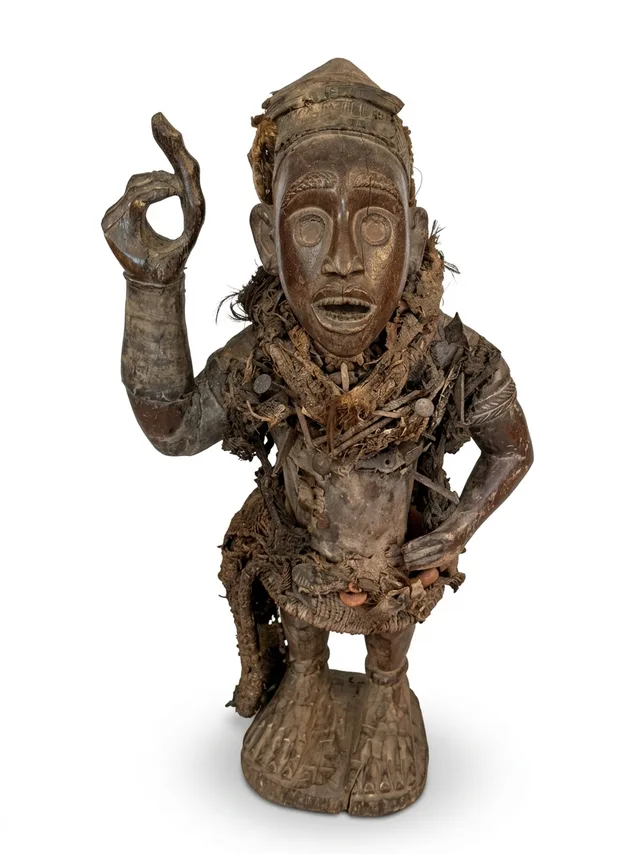
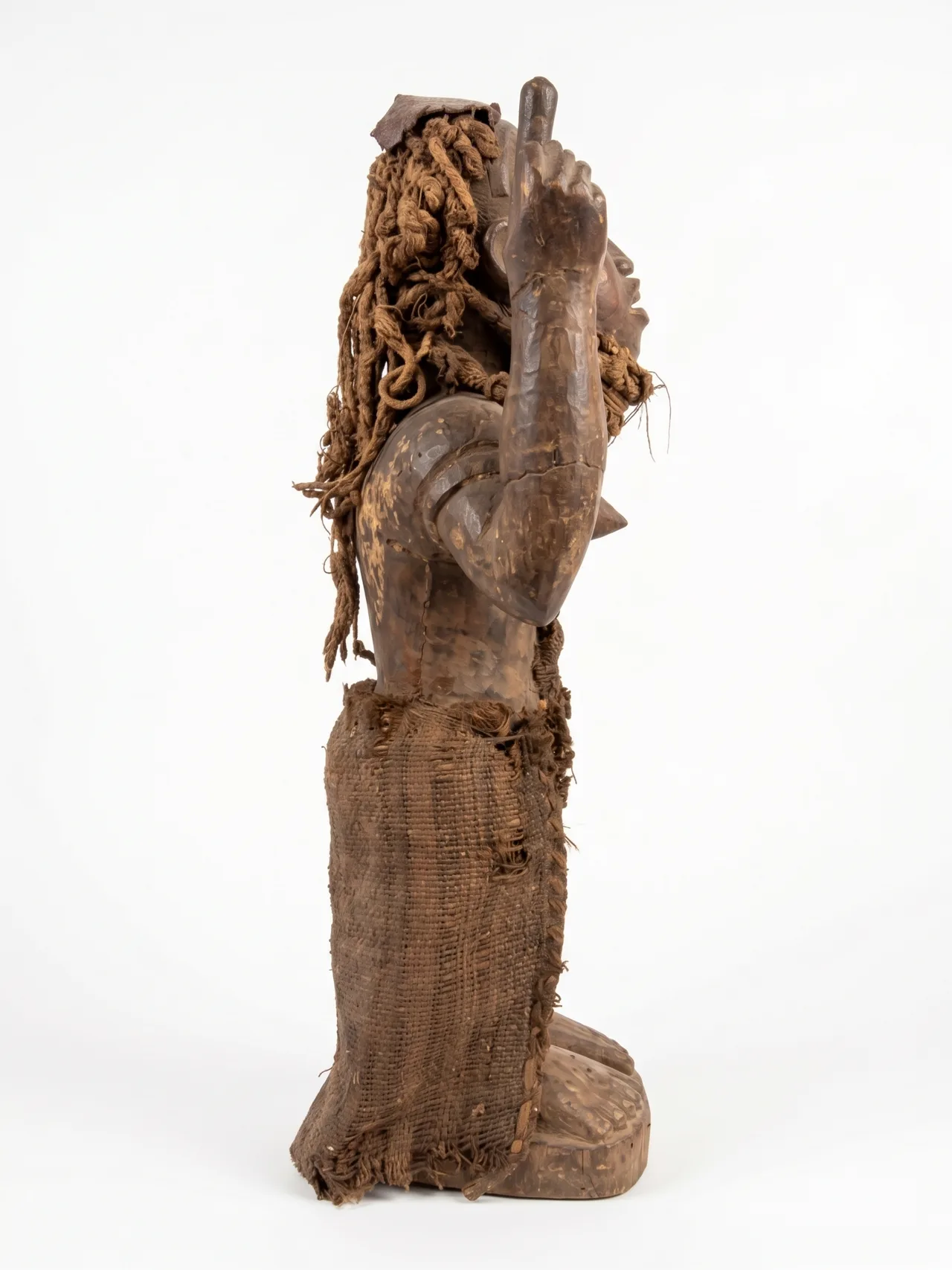
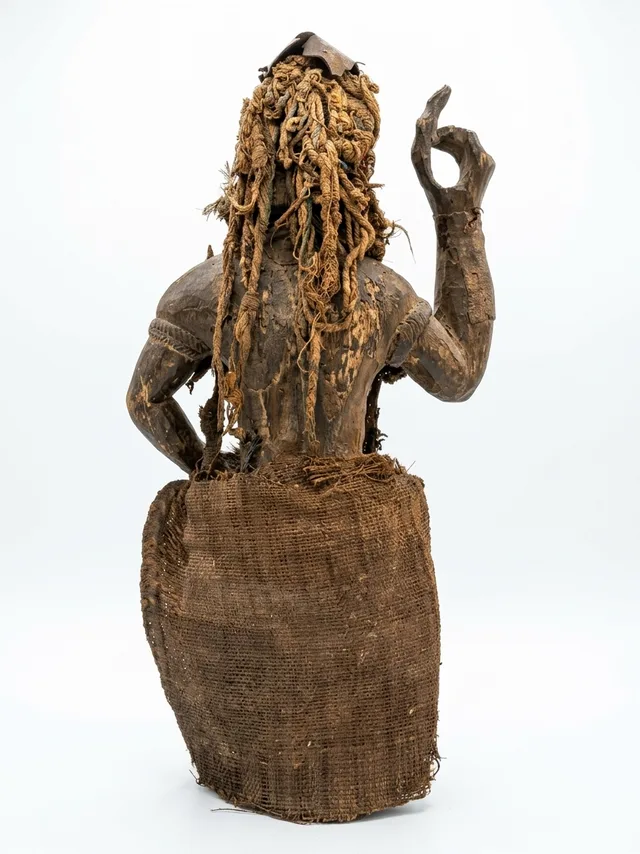
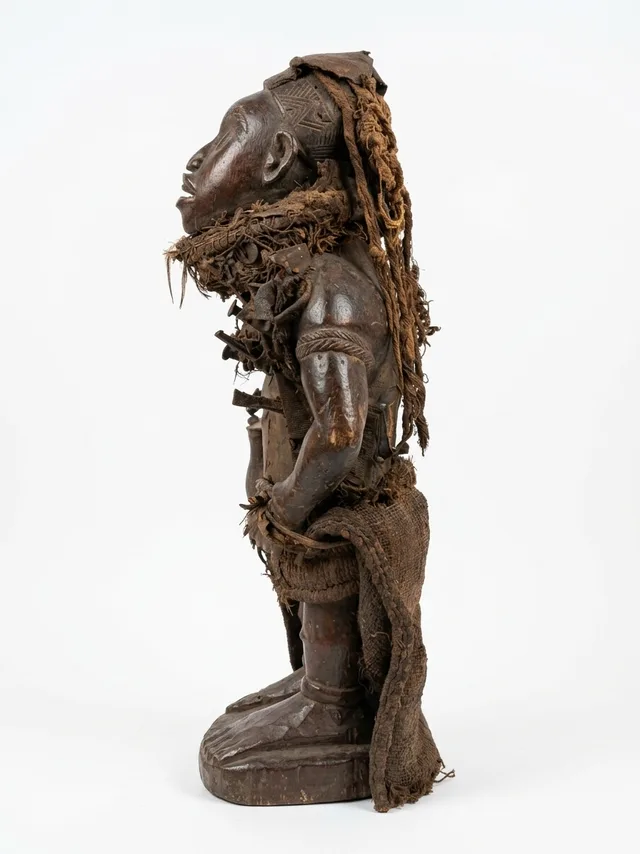
Nkisi Nkondi power figure
Bakongo (Kongo) · 19th–20th century
Details
| Dimensions | Height 67 cm (26⅜ in)Width 36 cm (14⅛ in)Depth 19 cm (7½ in) |
|---|---|
| Country | Democratic Republic of the Congo / Republic of the Congo / Angola The Kongo cultural region spans the western Democratic Republic of the Congo, the Republic of Congo, and northern Angola, the historical heartland of the Kongo Kingdom. |
| Tribe / Culture | Bakongo (Kongo) This figure is attributed to the Bakongo (Kongo) peoples, whose historical range spans coastal and interior Central Africa. Within Kongo culture, sub-groups such as the Yombe and Vili along the Atlantic coast are especially renowned for producing this style of power figure, developing a distinctive sculptural language of expressive faces, akimbo stances, and richly assembled ritual surfaces that remains among the most recognised traditions in Central African art. |
| Age / Period | 19th–20th century Pieces in this tradition, known as Nkisi Nkondi, or power figures, are most closely associated with the classic period of Kongo sculpture spanning the mid-19th to early-20th century, roughly the 1850s–1930s, when the form reached its highest level of artistic and ritual sophistication. This places this type of figure solidly within the late 19th to early 20th century, an era widely regarded by collectors as the golden age of Kongo power-figure carving. |
Symbolism & Iconography
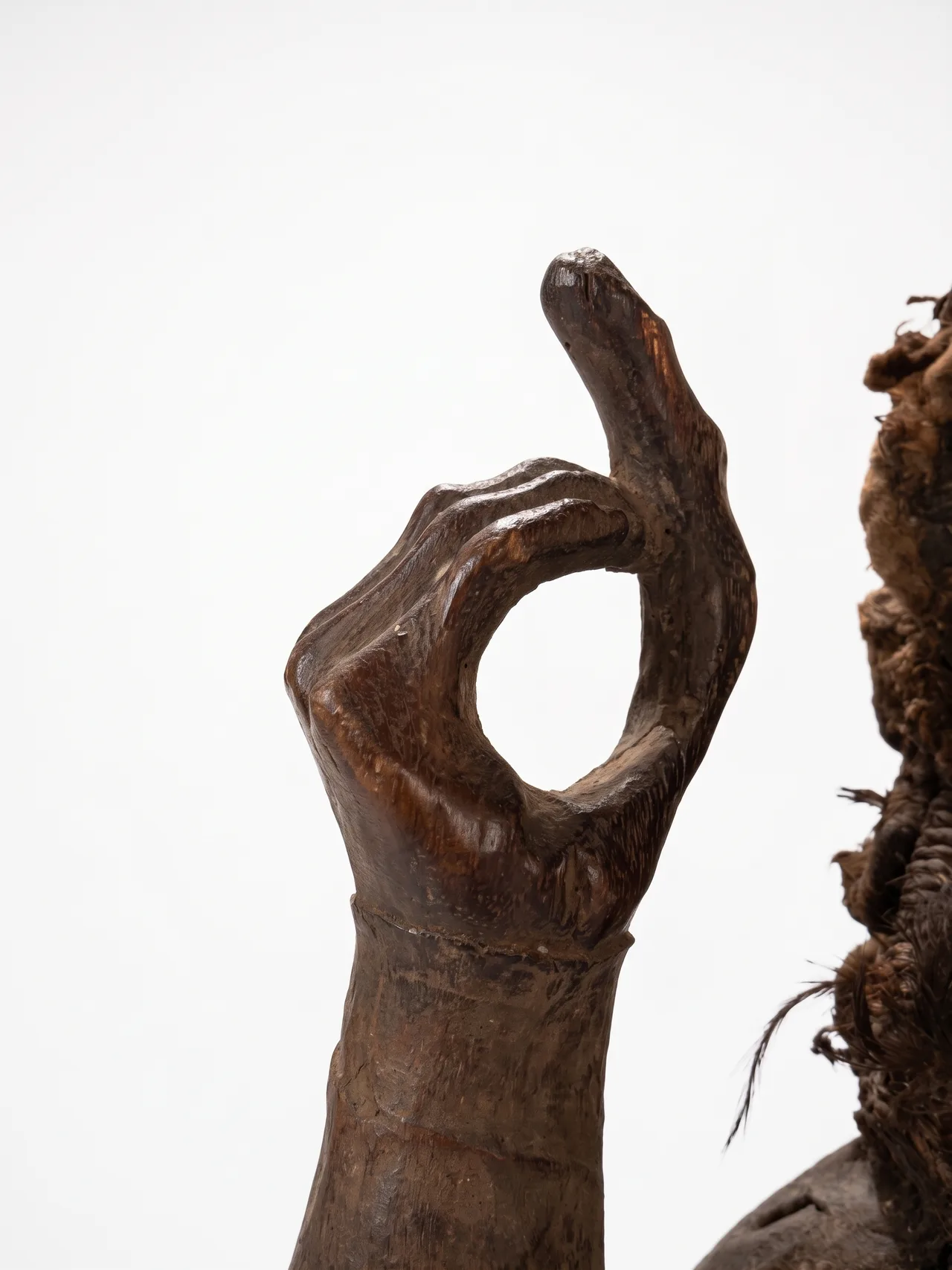
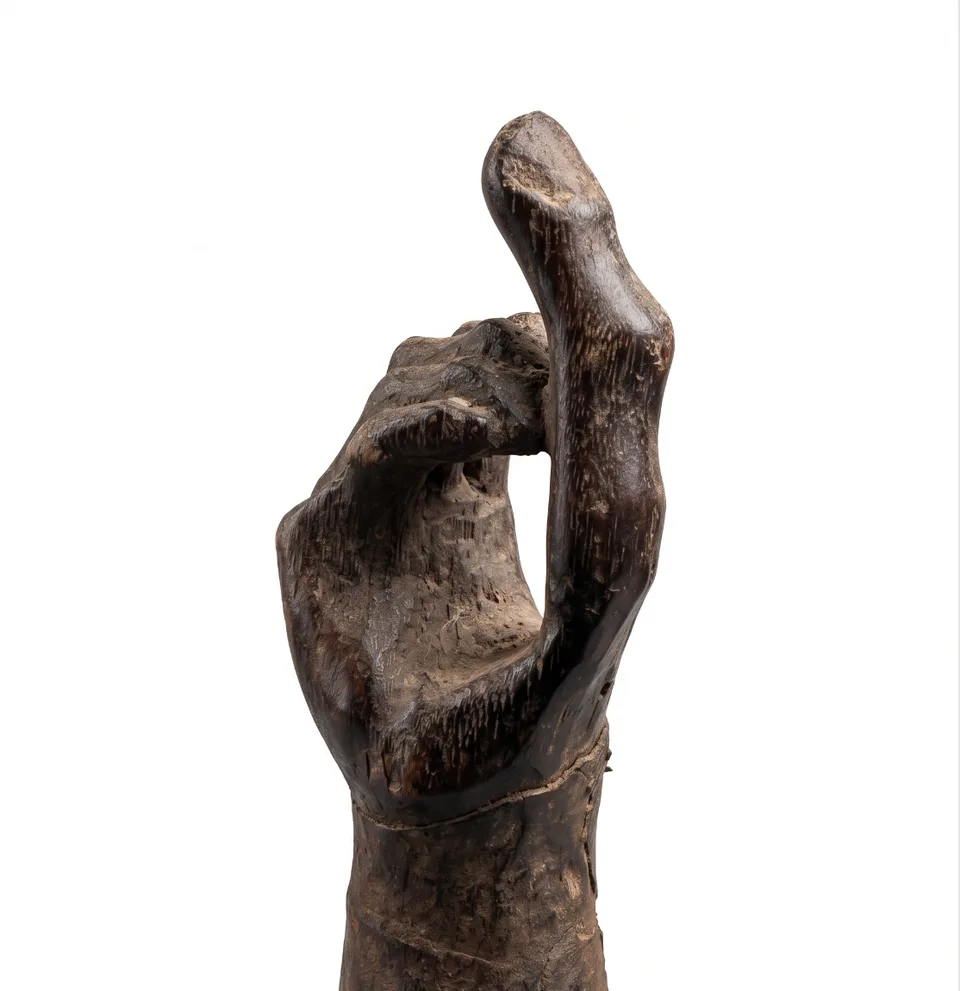
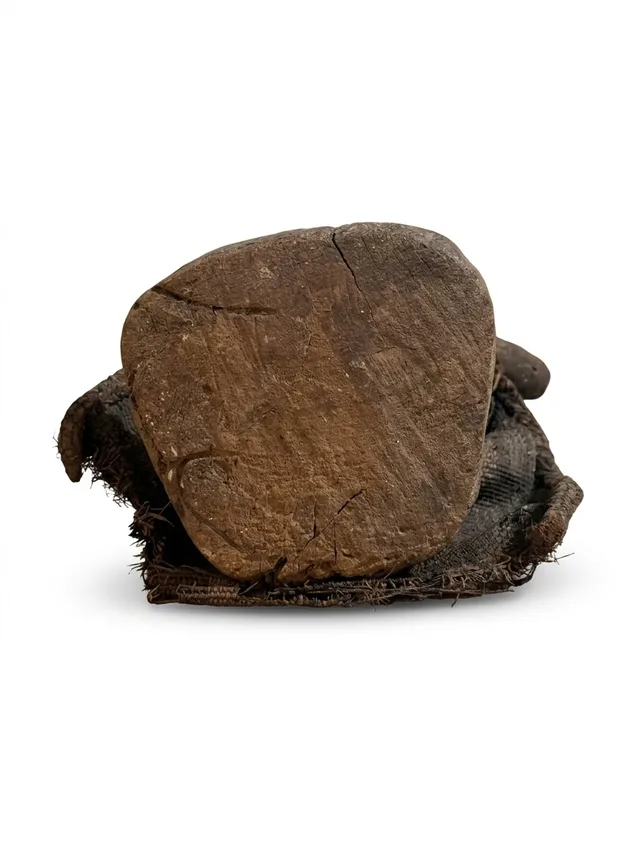
Every element of this figure carries meaning within Kongo cosmology. The raised arm and gesturing hand evoke a stance of challenge and vigilance, while the opposite hand set on the hip conveys the commanding posture of a chief or judge, a figure empowered to enforce agreements and confront wrongdoing. The open mouth suggests the voice of the spirit housed within, speaking on behalf of those who sought its power. The fitted cap recalls the Mpu headdress worn by Kongo leaders and ritual specialists, marking status and authority. Nails, blades, and fibre bundles embedded across the body each represent an individual invocation, an oath sealed, a dispute settled, or a plea for protection or healing, accumulated over the figure’s active life. At the centre, a cavity in the torso once held bilongo, the empowering medicinal substances of vegetal, animal, and mineral origin that activated the figure’s spiritual force, binding together the physical carving and its unseen power.
Aesthetic & Formal Analysis
The figure exhibits the striking visual density characteristic of Kongo power sculpture: a commanding human form rendered with a naturalistic yet stylised face, heavy-lidded eyes, a strong brow, and parted lips, set atop a body deliberately built up with layers of textile, fibre, and metal. This contrast between the calm, dignified carving of the face and the raw, accumulated intensity of the nail- and cord-covered torso produces a powerful visual tension prized by collectors of African art. The rich, dark wood patina, the frontal, confrontational pose, and the tactile complexity of the surface materials combine to give the piece both a monumental presence and a deeply tactile, sculptural richness that has made this genre one of the most celebrated and sought-after in the canon of African art.