
Punu · Gabon
Punu · Mid-20th century (circa 1930s–1950s) Late 19th to early 20th century (traditional ethnographic piece showing natural age
| Dimensions | Hauteur 34 cm (13⅜ in)Largeur 28 cm (11 in)Profondeur 35 cm (13¾ in) |
|---|---|
| Pays | République démocratique du Congo / Gabon / Cameroun / Côte d’Ivoire / Ghana Gabon (Central Africa) Central / West Africa (commonly traced to regions spanning Gabon, Cameroon, or the Democratic Republic of Congo) Gabon (Central Africa) Gabon / Cameroon (Central Africa) Gabon (Central Africa) West / Central Africa (commonly associated with regions such as Côte d'Ivoire, Ghana, or the Congo Basin) Central Africa (Democratic Republic of Congo / Gabon region) Gabon (Central Africa) Central Africa (Democratic Republic of Congo or surrounding region) Gabon (Central Africa) Gabon (Central Africa) Gabon (Central Africa) Central Africa (Democratic Republic of Congo region) |
| Tribu / Culture | Punu |
| Époque / Période | Mid-20th century (circa 1930s–1950s) Late 19th to early 20th century (traditional ethnographic piece showing natural age Mid-20th century (circa 1930s–1950s) Late 19th to early 20th century (traditional ethnographic piece showing natural age patina and wear) Late 19th to early 20th century (traditional ethnographic piece showing rich, aged wood patina and surface wear) Late 19th to early 20th century (authentic ethnographic piece showing deep ritual use and historic wood aging) Late 19th to early 20th century (traditional ethnographic piece showing rich, aged wood patina and historic surface wear) Late 19th to mid-20th century (traditional ethnographic piece displaying rich weathered dark patina, metal stud oxidization, and ritual wear) Late 19th to mid-20th century (authentic ethnographic piece displaying aged white kaolin wash, deep wood oxidation, and ritual patina) Late 19th to early 20th century (authentic ethnographic piece displaying aged polychrome pigments, deep wood oxidation, and ritual wear) Late 19th to mid-20th century (traditional ethnographic piece showing rich historic patina, natural wear on the cowrie shells, and deep wood oxidation) Late 19th to early 20th century (traditional ethnographic piece showing rich, aged wood patina and historic surface wear) Late 19th to early 20th century (authentic ethnographic piece showing rich historic wood aging, surface wear, and pigment patination) Late 19th to early 20th century (traditional ethnographic piece showcasing rich historical wood patina and surface wear) Late 19th to mid-20th century (authentic ethnographic artifact showing heavy ritual use, deep wood oxidation, and integrated organic elements) |
Traditionally used in ancestral veneration and celebratory dances performed on stilts. The white kaolin pigment covering the face represents spiritual purity, the presence of ancestors, and the bridge between the living world and the spirit realm.
Serves as a conduit or guardian for ancestral spirits.
The serene, introspective expression and downcast or closed eyes signify deep spiritual contemplation, divine wisdom, and a peaceful transition between the earthly realm and the afterlife.
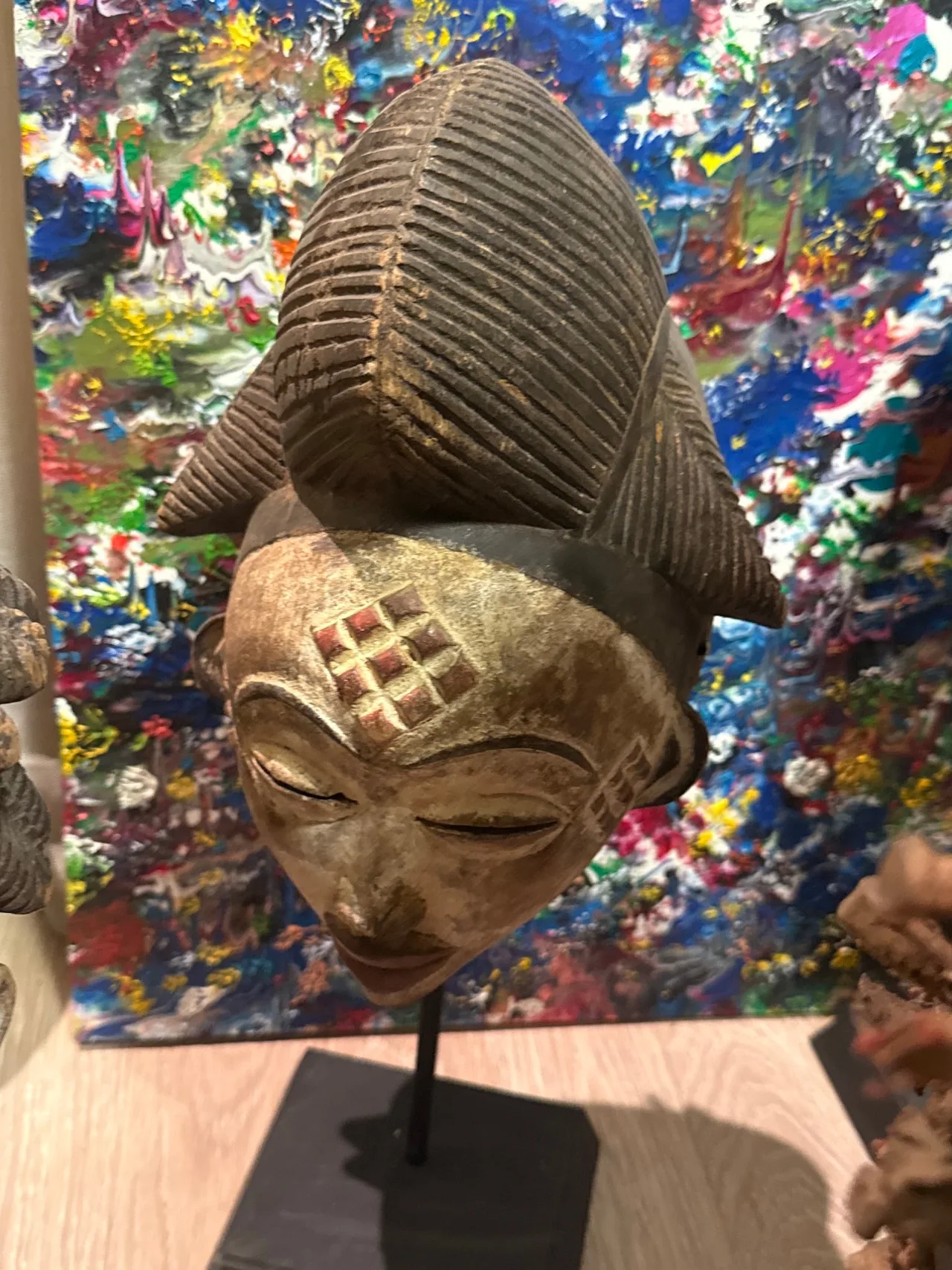
Represents an idealized female ancestor or spirit (okuyi) embodying grace, physical perfection, and moral beauty.
The white kaolin facial pigment (pembé) symbolizes the spirit world, purity, and the realm of the ancestors.
The distinct geometric or diamond scarification pattern on the forehead (mbotu) signifies high social status, identity, and noble lineage.
Acts as a fierce guardian of ancestral relics, sacred spaces, or lineage shrines, channeling protective spiritual forces.
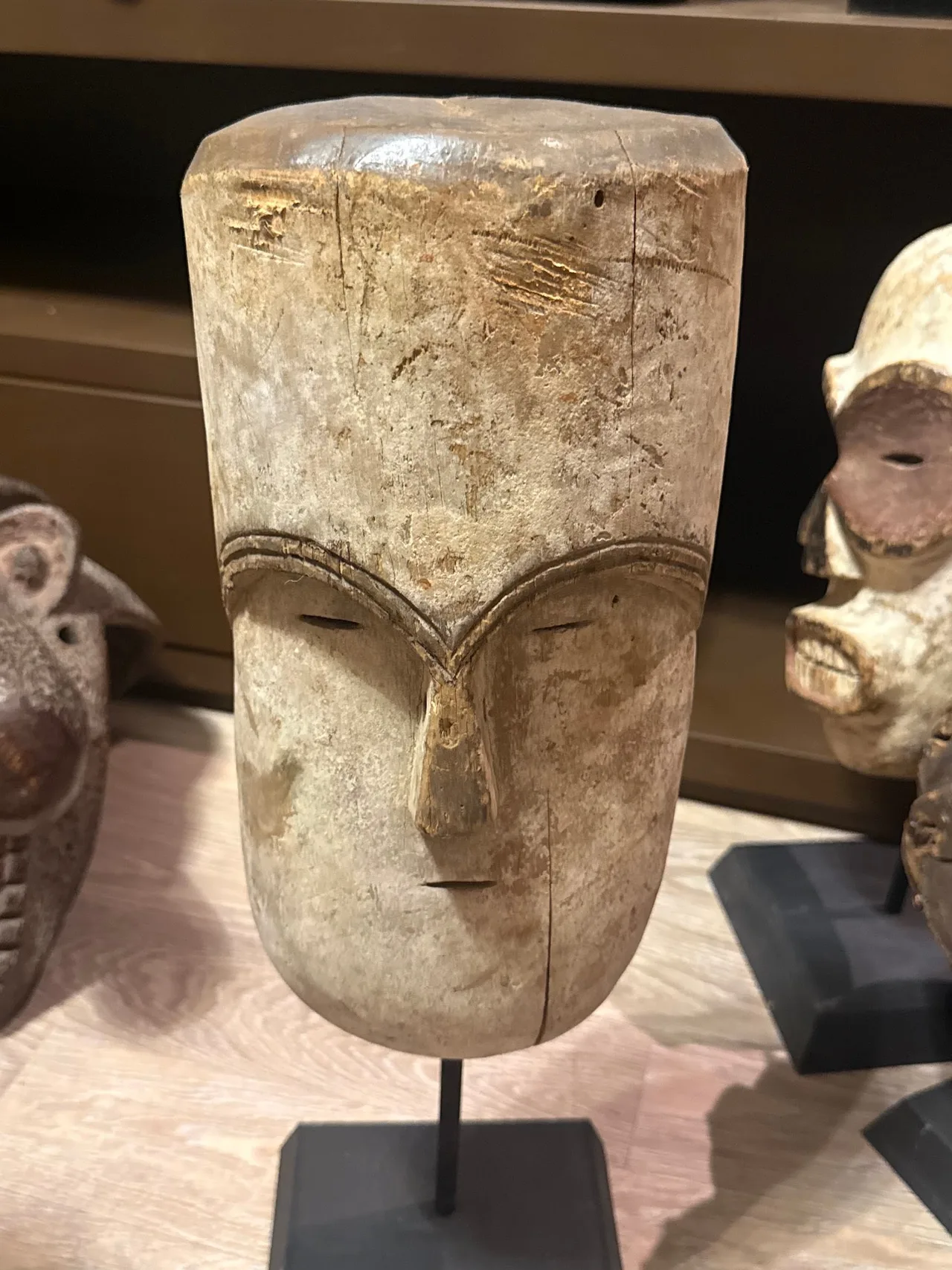
The striking, flat-topped cylindrical headpiece symbolizes elevated spiritual authority, profound mental fortitude, and a direct conduit to the wisdom of the ancestors.
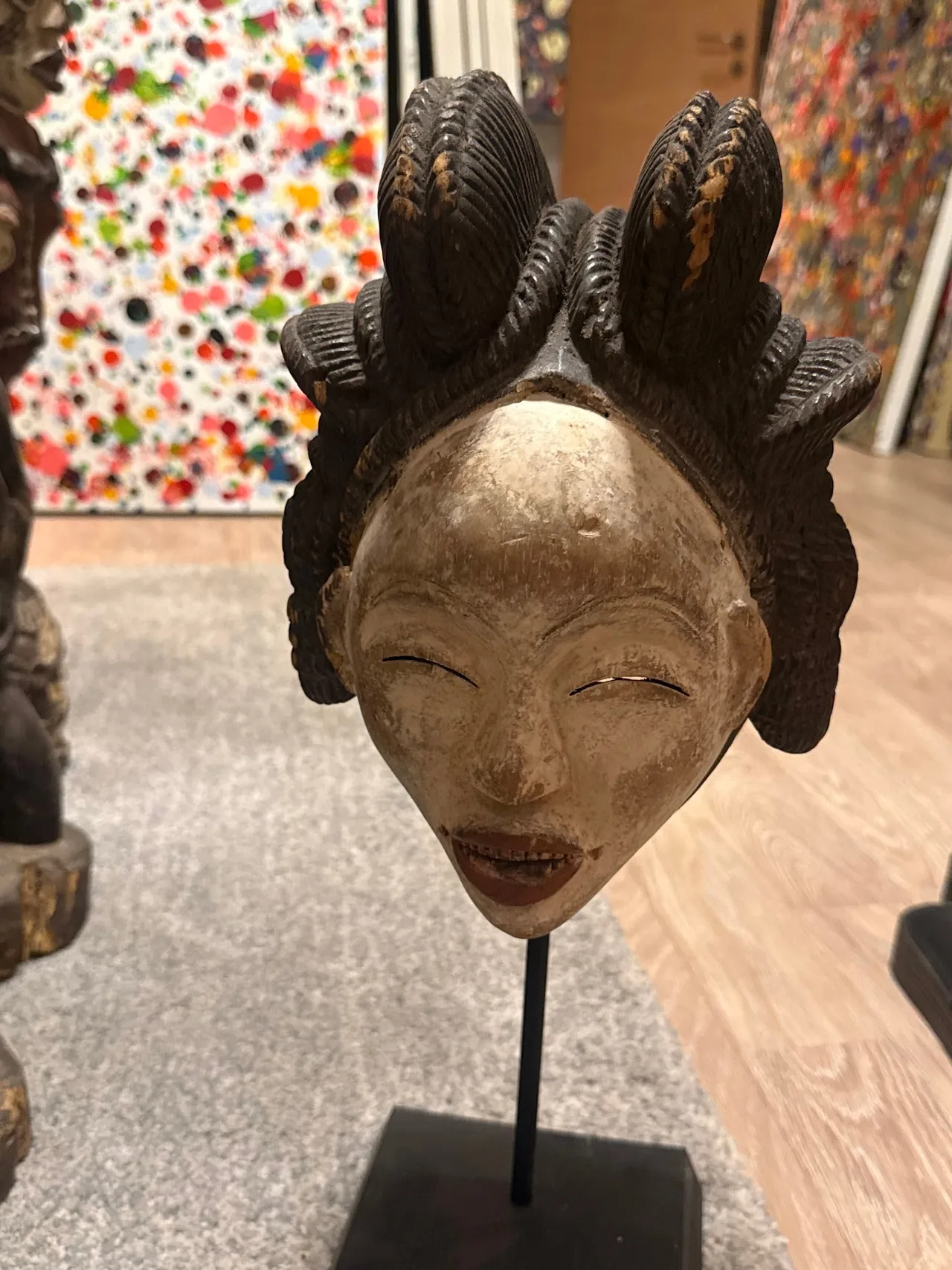
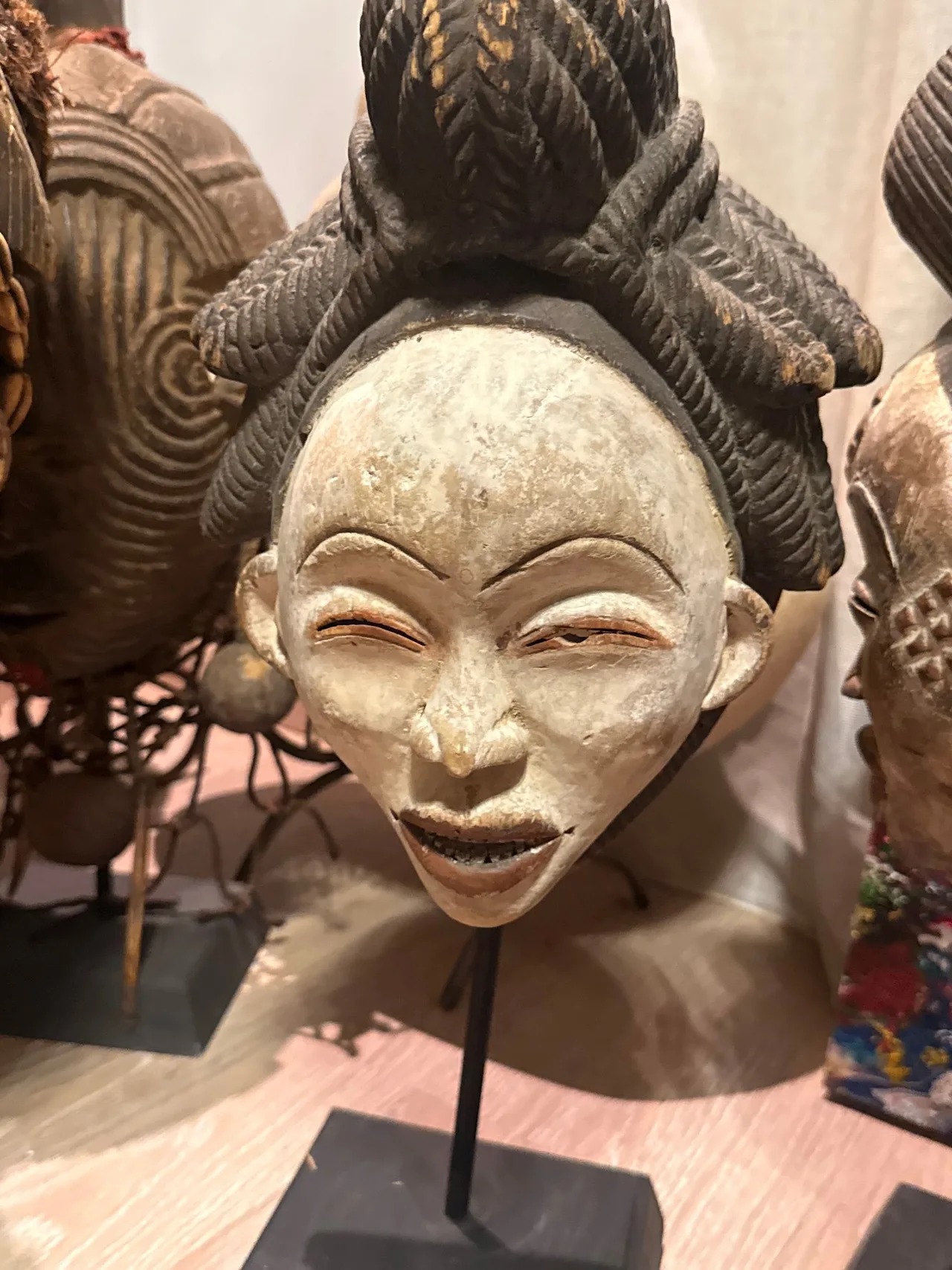
Represents an idealized female ancestor or spirit (okuyi) embodying grace, beauty, and moral perfection.
The elaborate multi-lobed hairstyle features distinct symmetrical crests, symbolizing high social status, prestige, and noble lineage within the community.
The white kaolin facial pigment (pembé) signifies the spirit world, purity, and a profound connection to the ancestors.
Acts as a powerful talisman or protective guardian meant to ward off malevolent forces and safeguard the community.
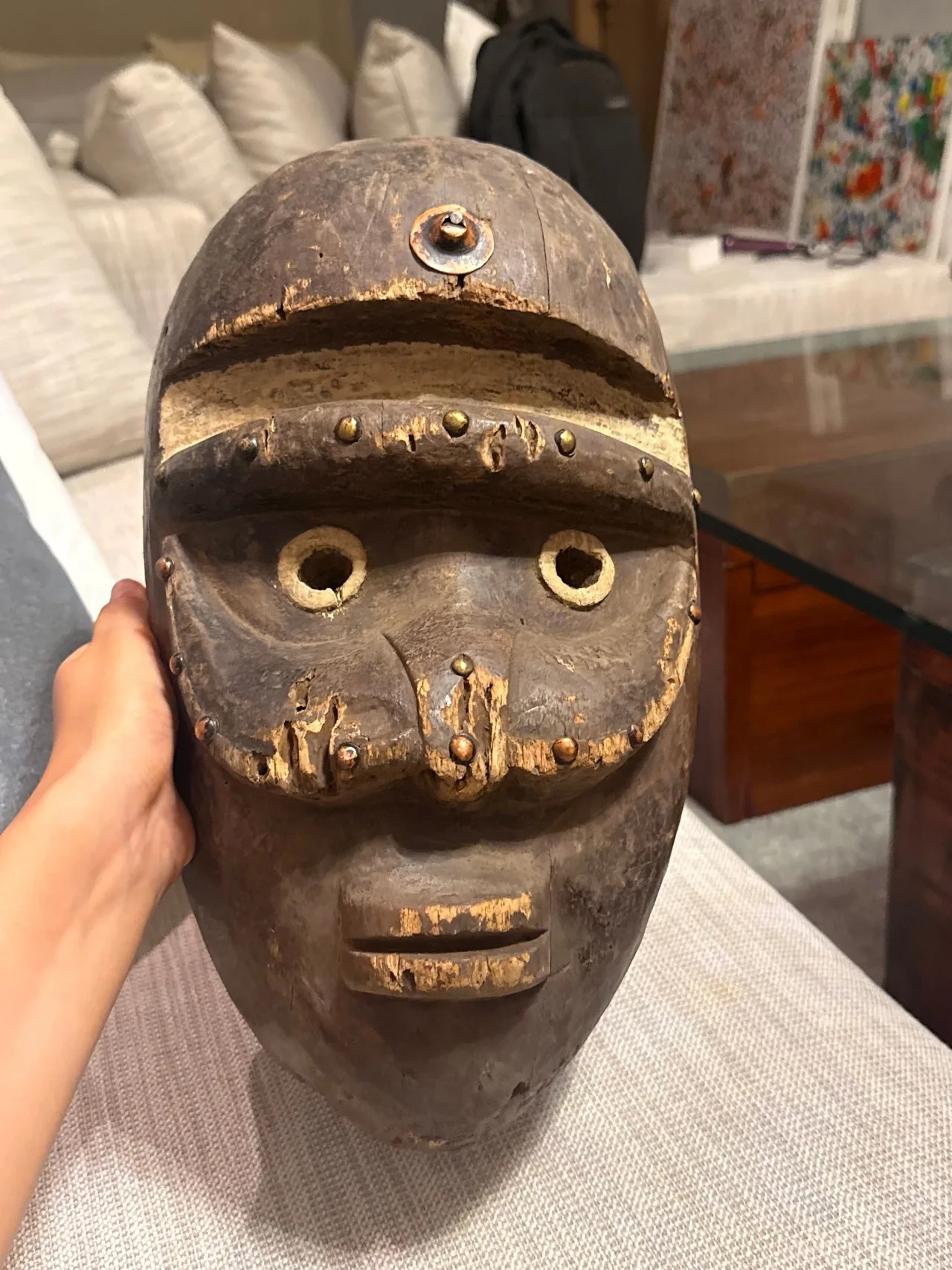
The hammered metal tacks and the central forehead token serve as ritual fortifications or spiritual "anchors," traditionally believed to seal protective or binding energy into the sculpture.
Represents a protective woodland spirit or ancestral entity invoked during community rites and healing ceremonies.
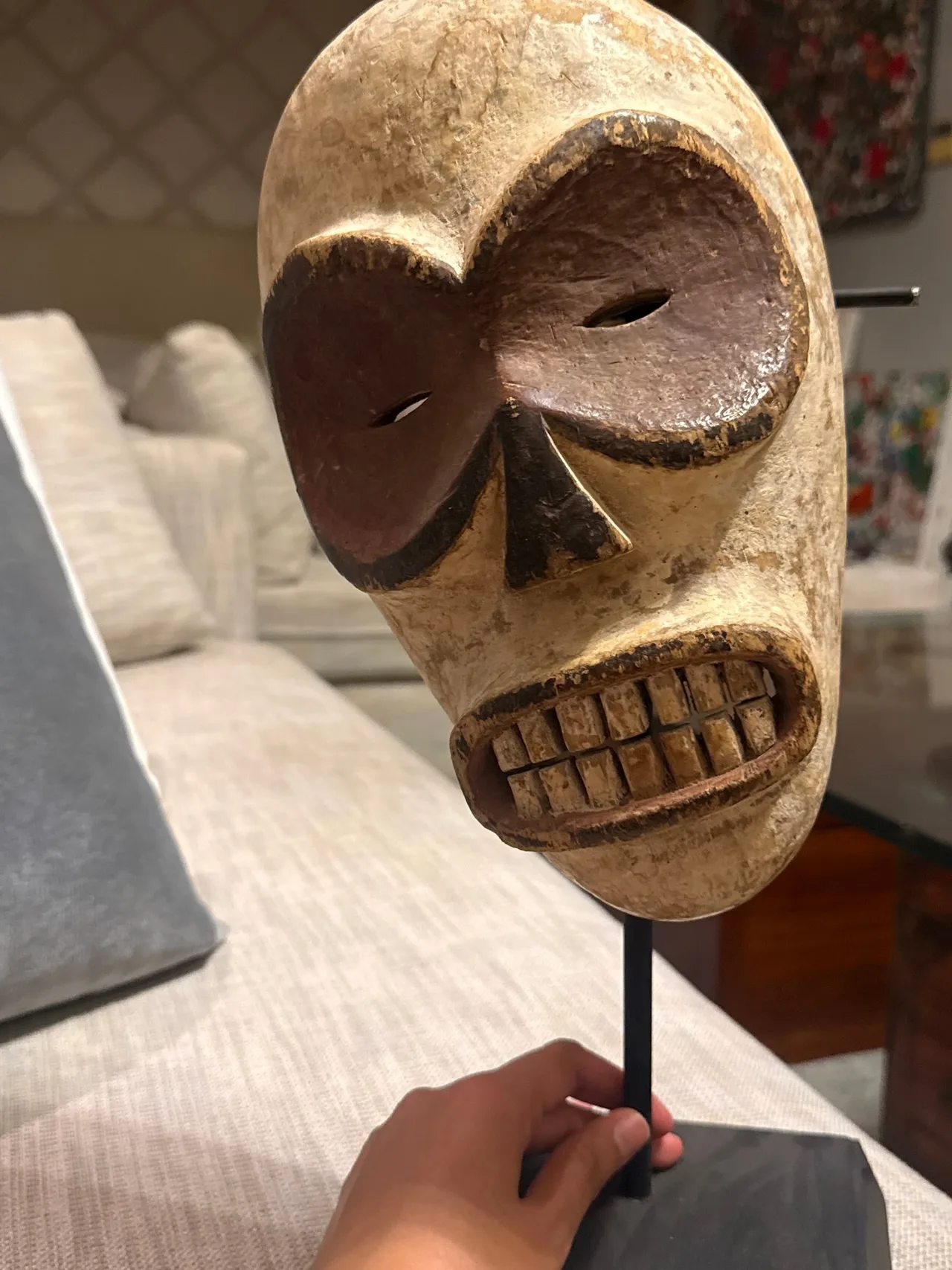
The prominent, wide-set goggled eyes symbolize spiritual alertness, omniscience, and the ability to pierce through the physical realm into the spirit world.
The exposed grid of carved teeth signifies power, fierceness, and the defense of the community against malevolent forces.
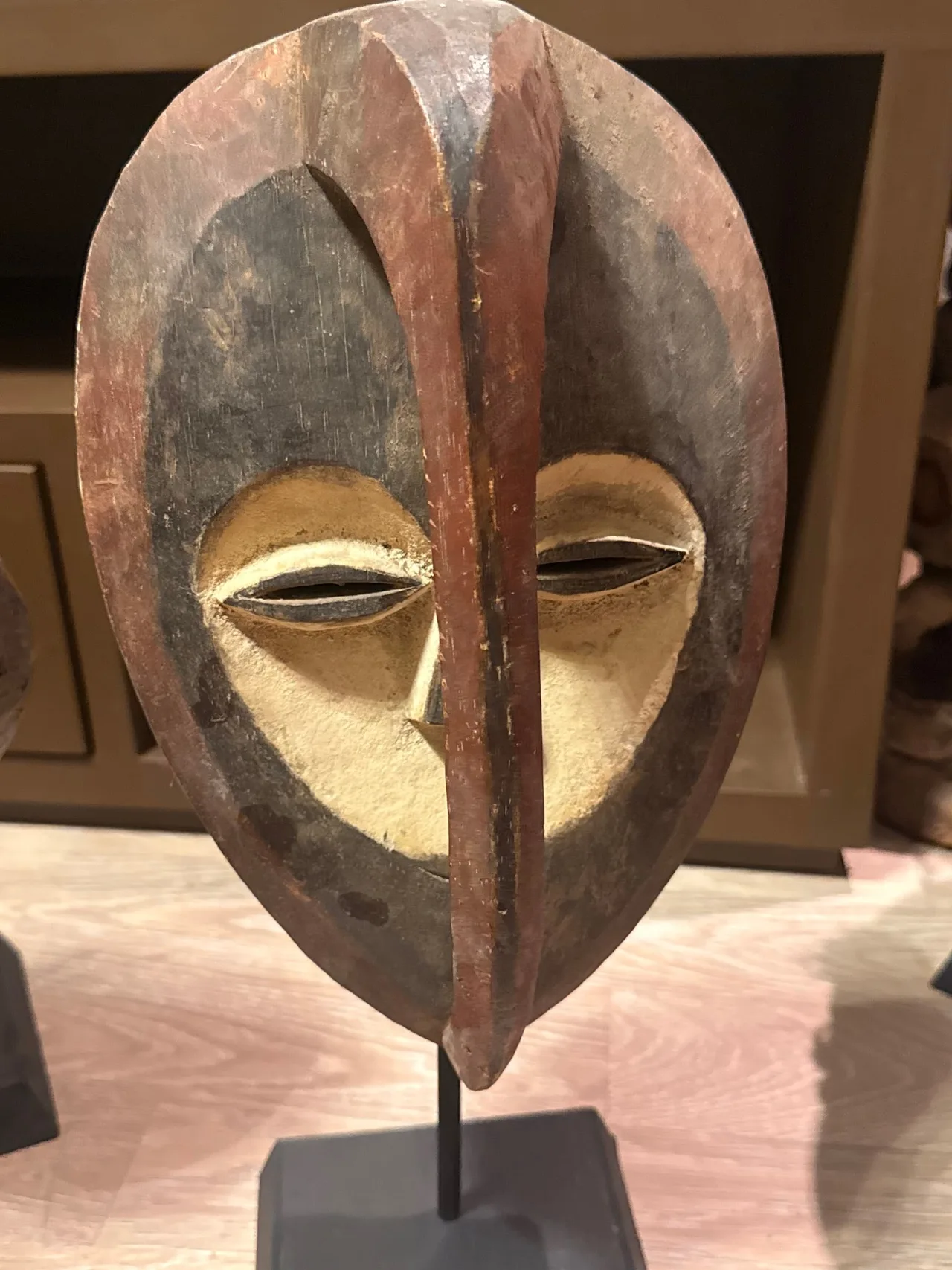
Represents a powerful ancestral spirit or guardian entity invoked during sacred Bwiti initiation rites and community protection ceremonies.
The striking, knife-like vertical ridge bisecting the face symbolizes spiritual clarity, cosmic equilibrium, and the duality of the physical and spirit worlds.
The contrasting white kaolin pigment (pembé) signifies purity, spiritual awakening, and a direct connection to ancestral lineage.
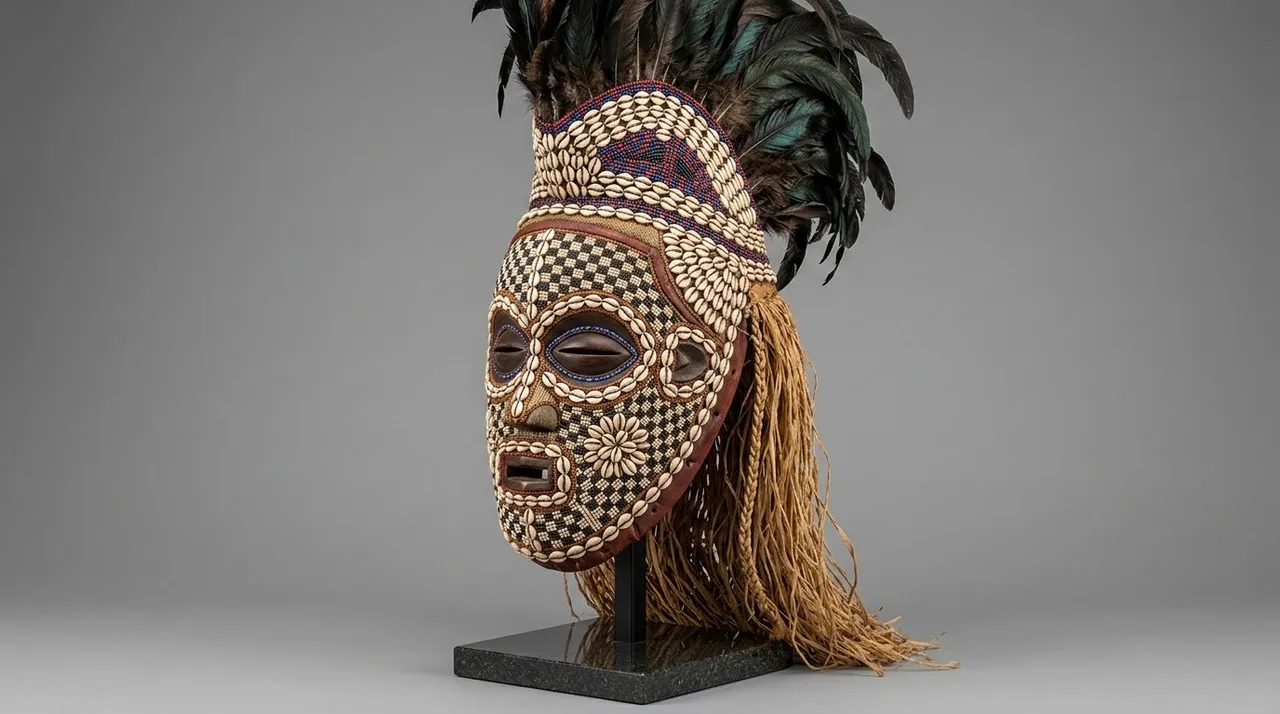
Represents a high-ranking ancestral spirit, tribal royalty, or a revered elder.
The prominent row of cowrie shells (Cypraea moneta) traditionally symbolizes wealth, prosperity, fertility, and divine protection or elevated social standing.
Represents an idealized female ancestor or spirit (okuyi) embodying grace, beauty, and moral perfection.
The elaborate multi-lobed hairstyle features distinct symmetrical crests, symbolizing high social status, prestige, and noble lineage within the community.
The white kaolin facial pigment (pembé) signifies the spirit world, purity, and a profound connection to the ancestors.
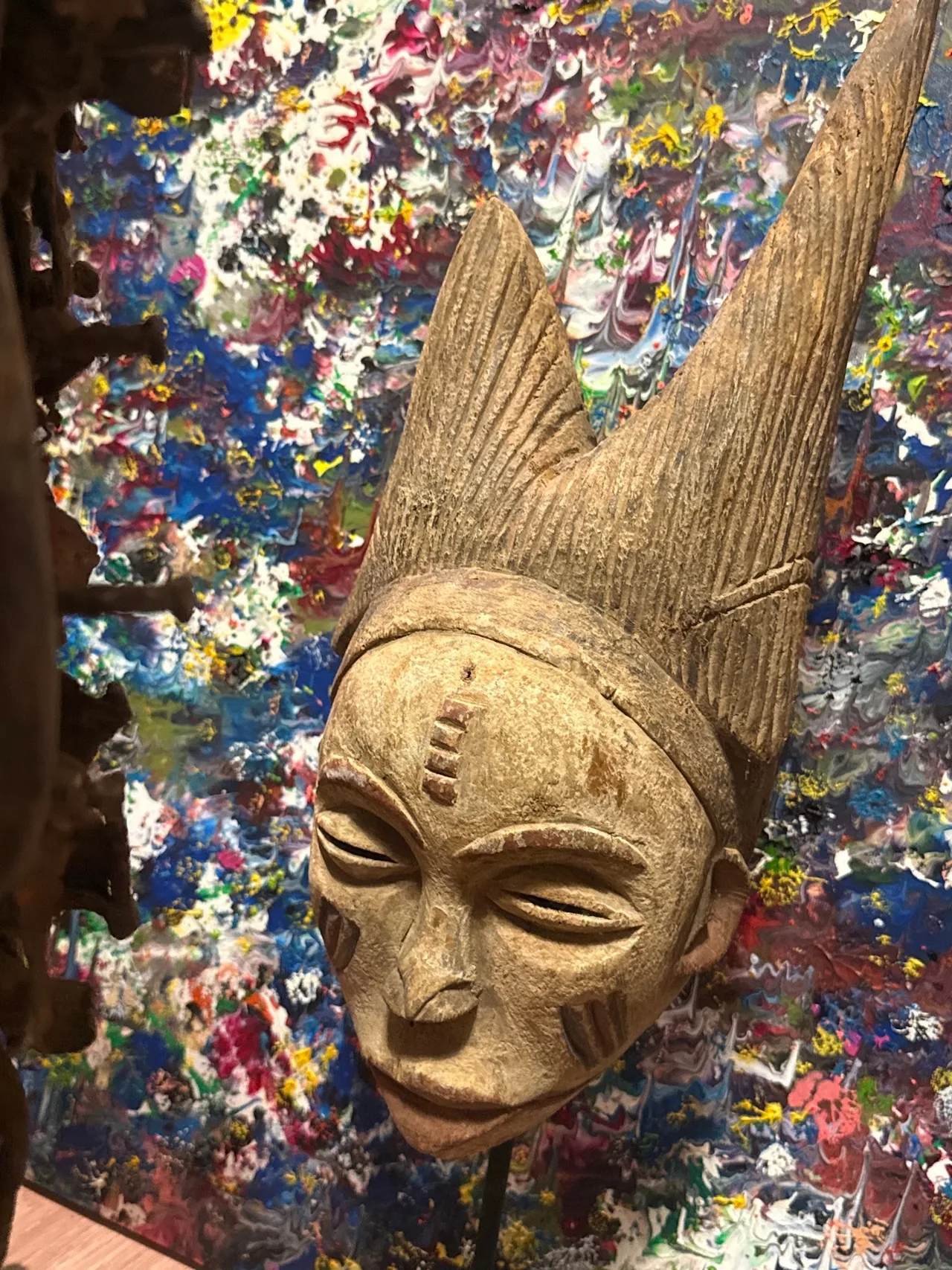
Represents a protective ancestral spirit or nature deity invoked during sacred community rites and celebrations.
The striking dual-horn configuration symbolizes spiritual power, vitality, authority, and a heightened connection to the supernatural realm.
Represents an idealized female ancestor or spirit (okuyi) embodying grace, beauty, and moral purity.
The prominent diamond-shaped scarification pattern (mbotu) on the forehead signifies high social status, noble lineage, and cultural identity.
The white kaolin facial pigment (pembé) symbolizes the spirit world, purity, and a profound connection to the ancestors.
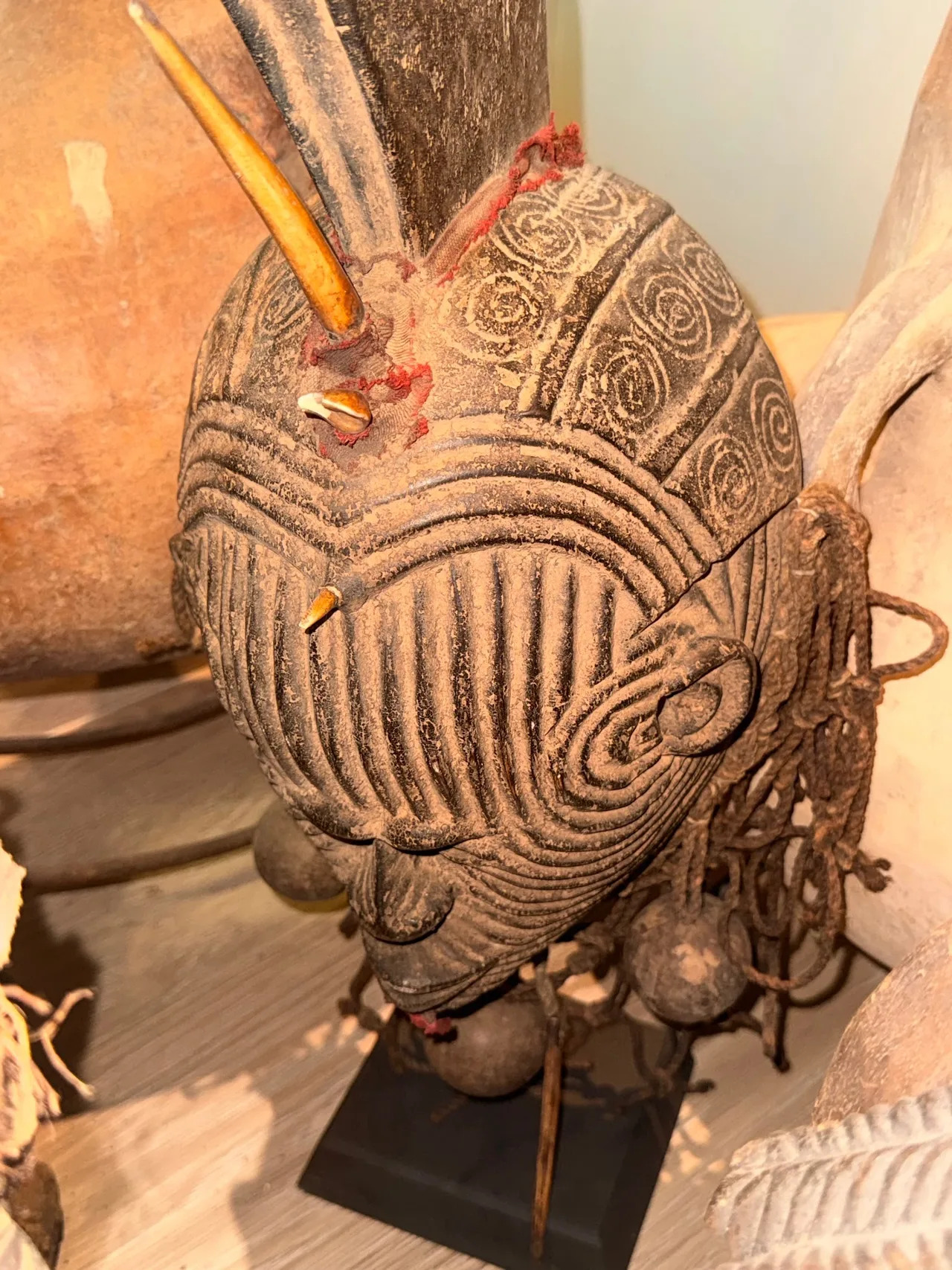
Acts as a powerful talismanic or ritual object embodying protective spiritual forces and ancestral authority.
The embedded bone or animal tooth inserts and hanging amulets traditionally serve as spiritual fortifications, sealing protective or binding energies into the sculpture.
Tribe / Culture: Central African tribal traditions (featuring stylistic traits associated with the Songye, Kwele, or Luba cultures known for powerful spirit masking)
Tribe / Culture: Punu or Shira cultural traditions (renowned for expressive, highly stylized ritual and ancestral masks featuring elaborate coiffures)
Characterized by an idealized serene female countenance, entirely coated in white kaolin, featuring downcast almond-shaped eyes, delicate scarification marks on the cheeks and forehead, and a classic arched coiffure design.
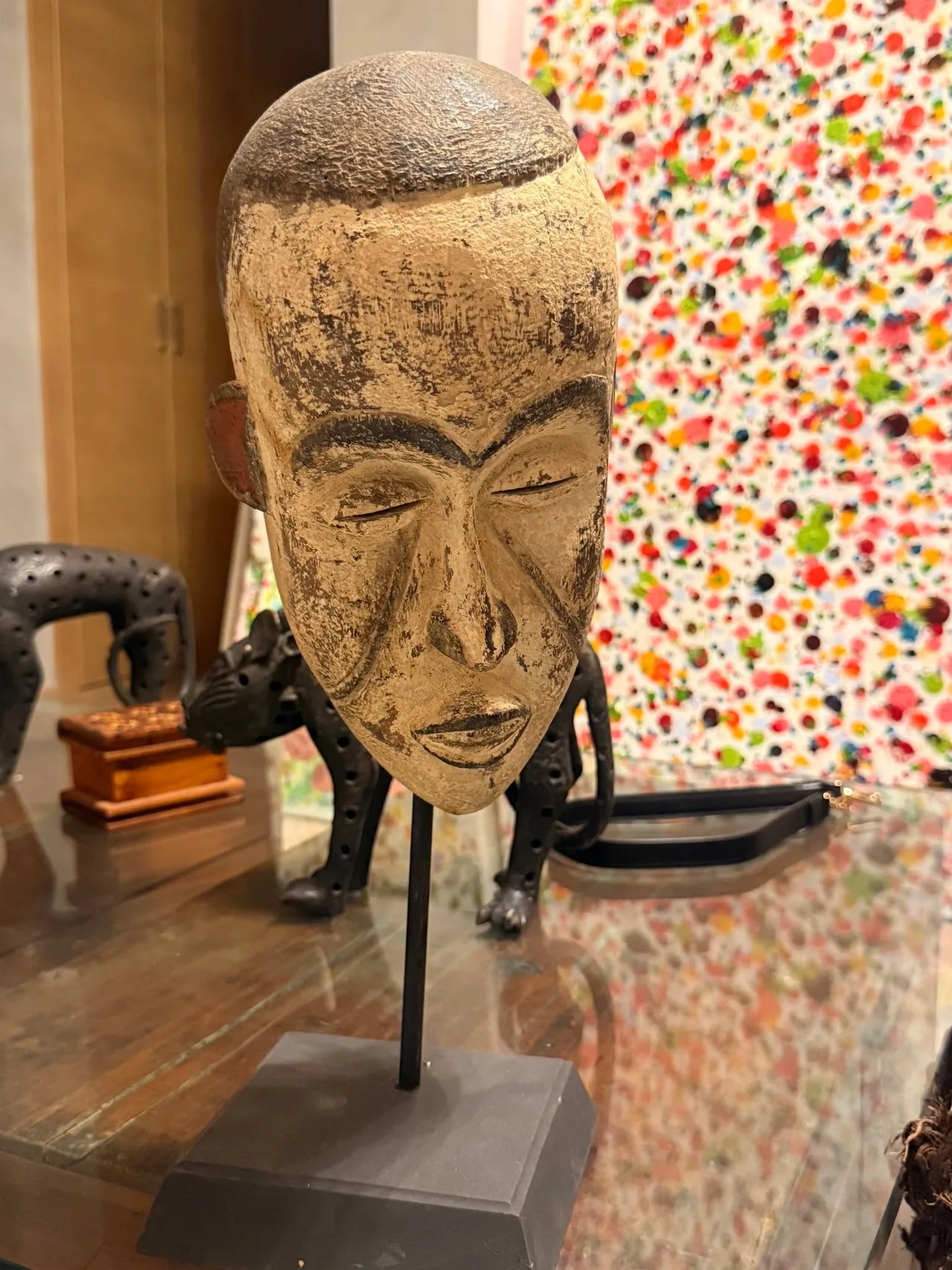
Titre (Title): Ancestral Reliquary Head / Ceremonial Tribal Head
Material & Patina: Weathered white kaolin/pigment wash contrasting against aged, dark-grained carved wood.
Form: Stripped-back, minimalist facial planes with a high prominent forehead, delicate nose contour, and quiet symmetry.
Presentation: Blends classical tribal minimalism with modern curatorial design, elevated on a sleek black metal armature against a vibrant, expressionist backdrop.
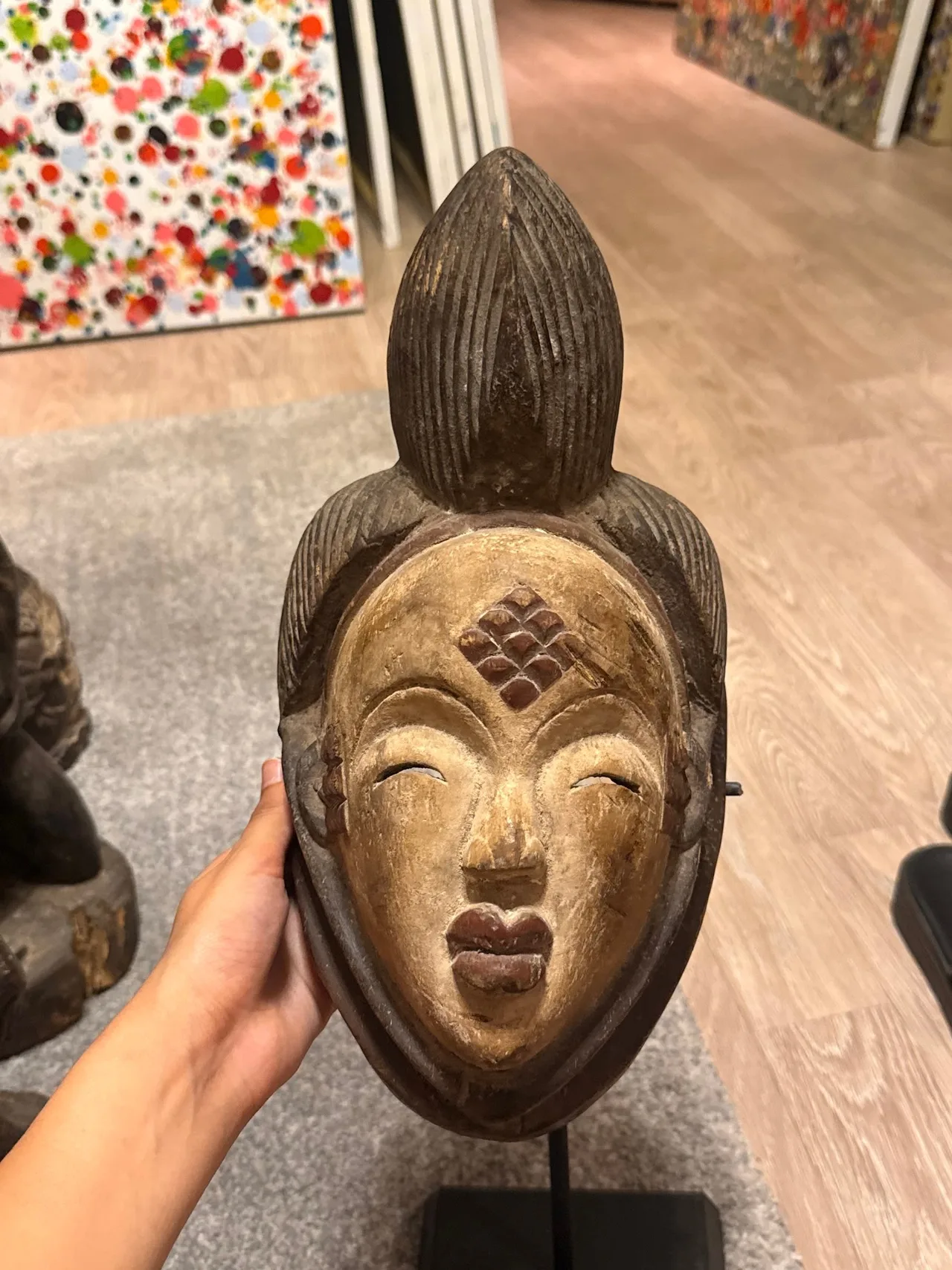
Titre (Title): Punu Okuyi Spirit Mask / Mukudj Ancestral Maiden Mask
Material & Patina: Weathered white kaolin wash contrasting against deeply aged, dark-grained carved wood and warm reddish-brown pigment accents.
Form: Striking heart-shaped facial plane, serene downcast "coffee-bean" eyelids, full lips, and a prominent, elaborately braided central crest coiffure.
Presentation: Elevated on a modern custom black metal armature, marrying classical tribal artistry with contemporary gallery curation.
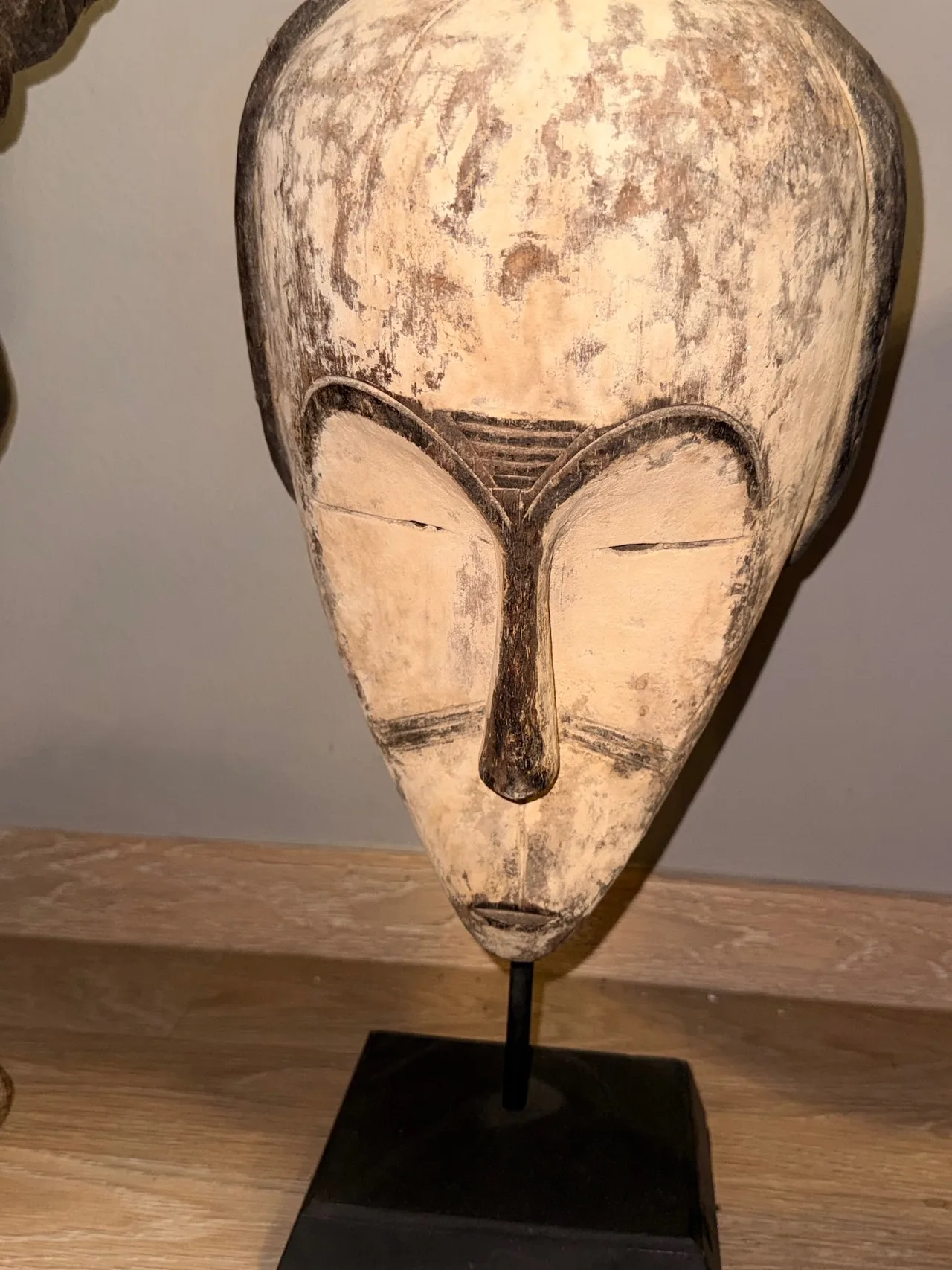
Titre (Title): Cylindrical Ancestral Reliquary Head / Fang Tribal Mask
Material & Patina: Weathered chalky white and grey pigment wash contrasting against dense, heavily aged dark tropical hardwood with visible grain and fissures.
Form: Striking geometric abstraction characterized by a sweeping, prominent brow ridge that arches into a clean triangular plane, framed by minimalist slit eyes and a quiet, restrained mouth.
Presentation: Elevated on a sleek black metal armature, highlighting its primitive architectural purity and museum-grade presence.
Titre (Title): Punu Multi-Crested Okuyi Mask / Gabonese Ancestral Maiden Mask
Material & Patina: Weathered white kaolin wash on the face contrasting against deeply oxidized, dark-grained carved wood with rich historical patina.
Form: Striking heart-shaped facial plane, serene downcast almond-shaped eyes, delicate nose contours, and an open mouth showing carved teeth, capped by an architectural multi-horn coiffure.
Presentation: Elevated on a modern custom black metal armature, marrying classical tribal artistry with contemporary gallery curation
Titre (Title): Studded Tribal Ritual Mask / Ceremonial Brass-Tacked Mask
Material & Patina: Heavily oxidized dark tropical hardwood accented with hammered brass/copper upholstery tacks and an embedded metal forehead disk.
Form: Strikingly robust architectural features, deep-set circular eye sockets, a pronounced structural brow ridge, and a solid, blocky mouth.
Presentation: Raw, tactile ethnographic presence showcasing authentic hand-carved textures and historical ritual modifications.
Titre (Title): Goggled-Eye Ceremonial Mask / Tribal Toothy Spirit Mask
Material & Patina: Chalky white and cream pigment wash over the high-domed head, contrasting sharply with deeply oxidized dark brown wood around the eye frames and mouth.
Form: Striking graphic abstraction featuring massive circular ocular planes, a sharp wedge nose, and an expressive, rectangular bared-teeth mouth.
Presentation: Mounted as a sculptural object of high ethnographic and modern curatorial interest.
Titre (Title): Vertical-Ridge Ceremonial Mask / Mitsogo Ancestral Spirit Mask
Material & Patina: Rich dark-stained tropical hardwood contrasted with chalky white kaolin and earthy reddish-brown pigment washes.
Form: Striking graphic abstraction featuring a commanding central median blade, concave white eye orbits with minimalist slit eyes, and a sleek oval contour.
Presentation: Elevated on a modern custom black metal gallery armature, merging profound ethnographic heritage with clean, contemporary curation
Titre (Title): Cowrie-Embellished Ceremonial Mask / Royal Ancestral Spirit Mask
Material & Patina: Deeply weathered and oxidized dark tropical hardwood adorned with genuine stitched cowrie shells, geometric carved scarification panels on the forehead, and traces of earthy pigments.
Form: Features an elaborate central top-knot coiffure, deeply carved facial contours with quiet, downcast eyes, and a structured crown band wrapped in shells.
Presentation: A rich, highly tactile mixed-media artifact showcasing complex traditional ornamentation and deep historical depth.
Titre (Title): Punu Multi-Crested Okuyi Mask / Gabonese Ancestral Maiden Mask
Material & Patina: Weathered white kaolin wash on the face contrasting against deeply oxidized, dark-grained carved wood with rich historical patina.
Form: Striking heart-shaped facial plane, serene almond-shaped eyes, delicate nose contours, and an open mouth showing carved teeth, capped by an architectural multi-horn coiffure.
Presentation: Elevated on a modern custom black metal armature, marrying classical tribal artistry with contemporary gallery curation.
Titre (Title): Dual-Horned Ancestral Spirit Mask / Gabonese Ceremonial Horned Mask
Material & Patina: Weathered chalky white and grey pigment wash over dense tropical hardwood, accented by traditional geometric scarification markings on the forehead and cheeks.
Form: Striking vertical symmetry defined by serene downcast almond-shaped eyes, a refined triangular nose contour, and dramatic sweeping horns.
Presentation: Elevated on a modern custom black metal gallery armature, merging profound ethnographic heritage with contemporary curation.
Titre (Title): Punu Crested Okuyi Mask / Gabonese Ancestral Maiden Mask
Material & Patina: Weathered white kaolin wash on the face contrasting against deeply oxidized, dark-grained carved wood with rich historical patina.
Form: Classic heart-shaped facial plane, serene downcast almond-shaped eyes, delicate nose contours, and an elaborately grooved, high-sweeping single central crest coiffure.
Presentation: Elevated on a modern custom black metal gallery armature, merging classical tribal artistry with contemporary gallery curation.
Titre (Title): Power-Figure Ceremonial Helmet Mask / Kuba-Songye Initiation Mask
Material & Patina: Heavily oxidized and weathered dark tropical hardwood integrated with organic bone/tooth spikes, woven cordage, and hanging charm elements.
Form: Intricate, high-relief linear grooving and spiral geometric motifs covering the entire cranial structure and facial plane, centered around a powerful brow and compressed features.
Presentation: A deeply tactile, complex mixed-media ethnographic artifact showcasing elite ritual craftsmanship and museum-grade presence.
Tribe / Culture: Central African tribal traditions, bearing strong stylistic affinities with groups such as the Fang, Punu, or Kota cultures known for ancestral veneration art.
Tribe / Culture: Punu people (originating primarily from the Ngounié province region)
Tribe / Culture: Fang culture (renowned for powerful, highly abstract sculptural forms created for ancestral protection and veneration)
Tribe / Culture: Punu people (originating from the southern regions of Gabon)
Tribe / Culture: Central / West African tribal traditions (bearing strong affinities with groups such as the Bete, Dan, or Songye cultures known for talismanic and power-invoking art)
Tribe / Culture: Mitsogo (Tsogo) or related peoples of the Ogooué River region, celebrated for powerful initiation and ancestral masking traditions
Tribe / Culture: Central African tribal traditions (bearing strong affinities with cultures like the Kuba, Luba, or Hemba, renowned for royal regalia and intricate cowrie shell ornamentation)
Tribe / Culture: Punu people (originating from the southern regions of Gabon)
Tribe / Culture: Punu people (originating from the southern provinces of Gabon)
Tribe / Culture: Central African tribal traditions, bearing strong affinities with the Kuba, Songye, or Luba cultures known for complex power objects and initiation regalia
Punu · Gabon

Punu · Gabon
Punu · République démocratique du Congo

Yoruba · Nigeria

République démocratique du Congo

Songye · République démocratique du Congo